


This way savings won’t be effective; suggestion to increase weekly holidays
Questions have begun to arise about how effective the government’s decision to close offices and shops is in addressing the energy crisis. Several South Asian countries have increased full-day holidays to cope with the energy crisis. In contrast, Bangladesh has reduced working hours.
From the government side, it is being said that if all work can be completed during daylight, the electricity needed for lighting can be saved. At the same time, the fuel required for electricity generation will also be conserved. However, no information has been provided by the government regarding how much electricity can actually be saved.
Experts believe that even if office hours are reduced by one hour per day, employees still have to commute to offices five days a week. As a result, there is no change in fuel consumption for transportation. They think a similar situation will occur in the case of shops, especially large shopping malls. If shopping malls remain open, both sales staff and customers will come. In these two cases, the government should consider whether it is possible to keep them closed for a full day.
Due to the energy crisis, Sri Lanka has increased its weekly holiday from two days to three days. Pakistan has also taken a similar decision. After the Pakistan government suddenly increased fuel prices significantly due to the Iran war, state-run public transport in densely populated provinces including Islamabad is being made free for one month.
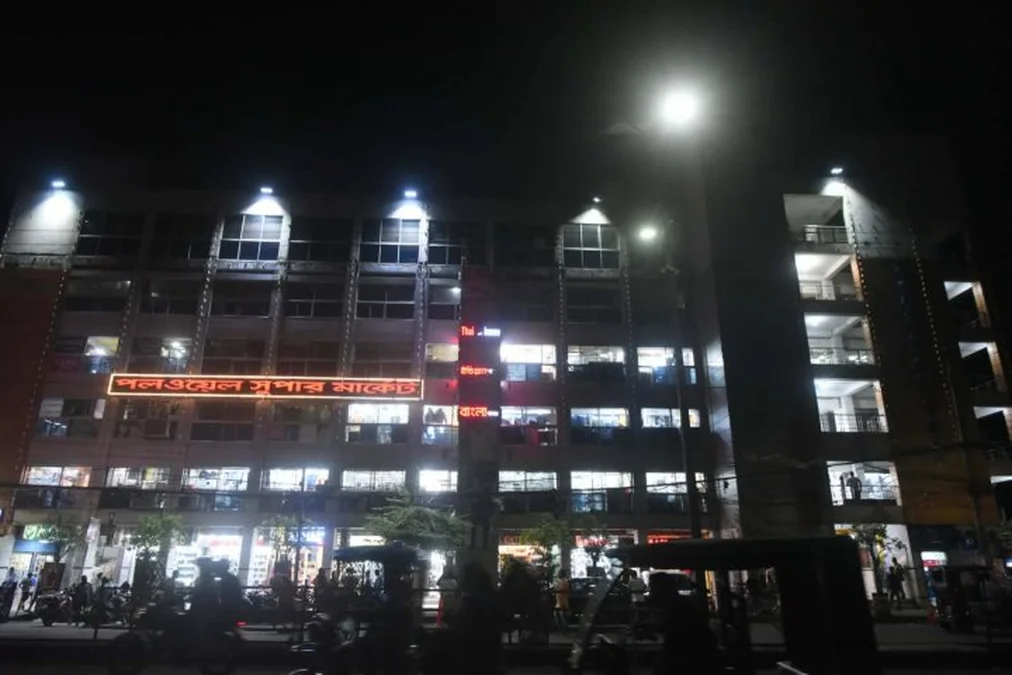
Concerned individuals say that usually large shopping malls in the capital open at 11 a.m. and operate continuously for 9 hours until 8 p.m. Inside the malls, glass-enclosed spaces require extensive artificial lighting. At the same time, air conditioning systems are also in operation.
There is not much difference in electricity consumption in shopping malls between day and night. In this case, if the market is operational, this level of load will be required. But if the market remains closed, less load will be needed.
An official from the power division said, suppose a shopping mall has a load of 8 megawatts—meaning it requires 8 megawatts of electricity per hour to operate daily. If it remains closed for one hour, it can save 8 megawatts of electricity per hour. If it remains closed for two hours, then 16 megawatts can be saved. If the market remains closed for 9 hours, then 144 megawatts of electricity will be saved.
The government has now reduced the closing time of shopping malls from 8 p.m. to 6 p.m. However, due to long-standing habits, people will not suddenly want to leave the market at 6 p.m. instead of 8 p.m. It is দেখা যায় that even when shops are supposed to close at 8 p.m., they usually start closing after 8:30 p.m. And it takes another 30 minutes to an hour for the entire shopping mall to fully shut down. Now, even if the closing process starts at 6 p.m., it will take another one to one and a half hours to complete. As a result, although some energy may be saved, it will not be very effective. Instead, during the crisis, if the weekly holiday can be increased from one day to two days, it will be easier to implement the government’s goal of saving energy. At the same time, customer and vendor movement to shopping malls will decrease by one day, reducing transportation fuel consumption.
On the other hand, in the case of government offices and courts, instead of reducing working hours, it should be considered whether the weekly holiday can be increased by one day. At the same time, energy can be saved by conducting meetings via Zoom instead of attending in person. Suppose a district has five upazilas. In these upazilas, Upazila Nirbahi Officers and Assistant Commissioners (Land) are working. They often have to attend meetings at the Deputy Commissioner’s office. During this energy crisis, if these meetings can be held online, officials will not need to be physically present. As a result, fuel will be saved. Similarly, placing more emphasis on online systems during the crisis can make the initiative more effective.
The government has issued instructions to reduce decorative lighting. In most cases, a large portion of decorative lighting during various festivals is done by government offices. In addition, lighting is now also used in weddings and other events. However, due to the use of LED lights, electricity consumption has already decreased significantly. Still, it is thought that during the crisis, such lighting could be completely stopped.
Energy expert Professor Dr. Ijaz Hossain said, “What is the benefit of burning fuel to go to the office? Rather, what is the problem in increasing the weekly holiday by one day like Sri Lanka?” He believes that if savings are to be achieved, they must be planned properly. Before making arbitrary announcements, attention should be given to how greater savings can be ensured.
Former Director General of the Power Cell B. D. Rahmat Ullah said, “With the current measures, 500 to 600 megawatts will be saved. But since the crisis is ongoing, we need to consider how to save even more. We have to continue our work while also conserving electricity. Decisions must be made considering all aspects so that more electricity can be saved.”
An official of DPDC, who wished to remain anonymous, said that although there is a directive to close markets at 8 p.m., in reality, they remain open until around 10 p.m. Accordingly, if shopping centers are closed at 6 p.m. as per the government decision, then in DPDC areas about 4 hours of electricity will be saved, which amounts to approximately 90 to 100 megawatts on average.