





BSC Writes to Foreign Ministry to Strengthen Diplomatic Efforts
Four Bangladesh Ships in Strait of Hormuz
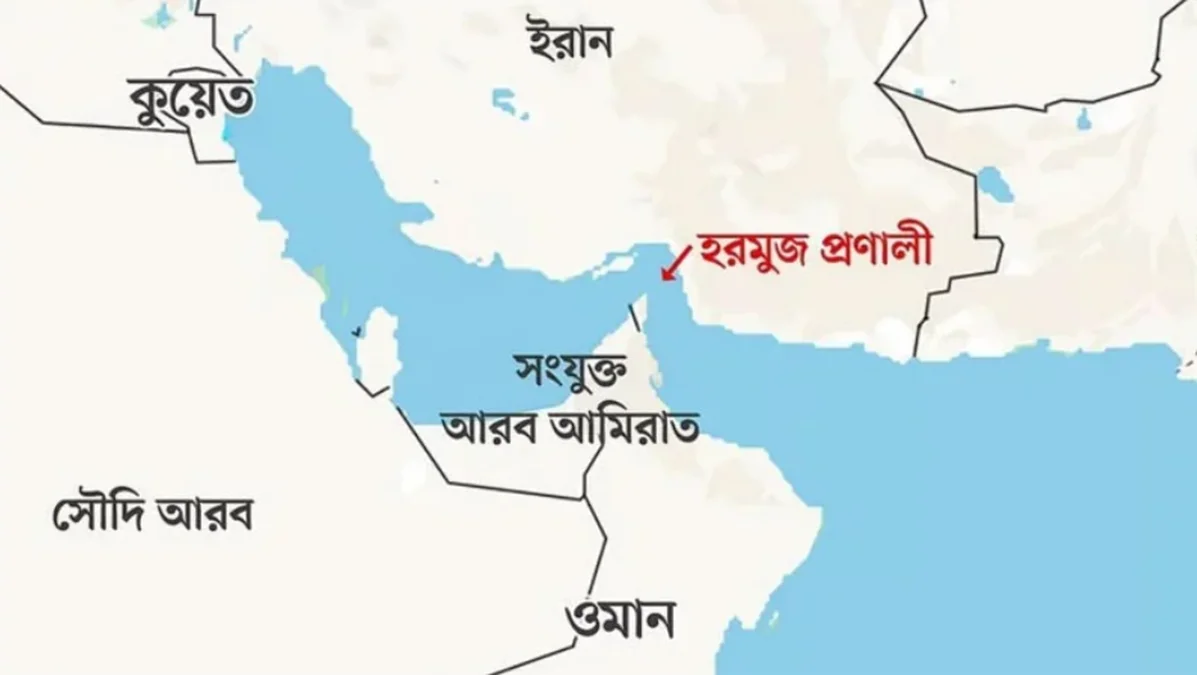
Although Iran has eased restrictions on vessel movement in the Strait of Hormuz, no Bangladesh-flagged ships have been able to cross the “red zone.” The number of such vessels is 20. Among them, 10 ships carry 146 seafarers and crew members. There are also four Bangladesh-flagged ships in nearby waters, all of whose seafarers and crew are Bangladeshi.
To ensure safety in the Strait of Hormuz, Bangladesh Shipping Corporation (BSC) sent a letter to the Ministry of Shipping five days ago. A copy of the letter was also sent to the Ministry of Foreign Affairs. However, no response has been received.
Due to a global oil crisis, Iran lifted strict restrictions last week on vessel movement for countries other than the United States and Israel. Following this, various countries have been trying to use the Strait of Hormuz. In this regard, Bangladesh is lagging behind. Despite bookings, 10 vessels carrying fuel oil and gas are unable to reach Bangladesh. One such vessel, “Libretha,” has failed to cross the Strait of Hormuz despite trying for a week. Another vessel, “Wabi Alsel,” which was scheduled to arrive yesterday, has been unable to pass through the strait to load fuel in Qatar. The BSC-owned vessel “Banglar Joyjatra” has also failed to cross the Strait of Hormuz.
146 Seafarers on 9 Ships
Captain Anam Chowdhury, president of the Bangladesh Merchant Marine Officers’ Association, said that four Bangladesh vessels are at risk around the Strait of Hormuz. In addition, there are five more vessels slightly farther from the strait. Although these ships are owned by foreign companies, several Bangladeshi seafarers and crew members are onboard. In total, 146 Bangladeshi seafarers and crew members are working on nine ships.
No Response Despite Letter
The vessel “Banglar Joyjatra” reached Jebel Ali Port in the United Arab Emirates on February 27, carrying 38,800 tons of steel coils from Mesaieed Port in Qatar. It has remained stranded there. BSC Managing Director Commodore Mahmudul Malek said that despite several attempts, the vessel failed to cross the Strait of Hormuz. Efforts are now underway through diplomatic channels to move the ship from the Persian Gulf through the Strait of Hormuz into the Arabian Sea.
10 Booked Vessels Unable to Arrive
Pre-scheduled vessels carrying fuel oil and liquefied gas have also been stranded due to the conflict. Bangladesh Petroleum Corporation (BPC) imports an average of 15 fuel oil vessels per month through Chattogram Port. In March alone, a total of 16 such vessels were scheduled to arrive, but as of yesterday, only 10 have arrived. On the other hand, nine LNG vessels were scheduled to arrive this month, but only four have reached. Altogether, in the 17 days since the conflict began, 18 vessels carrying LNG, LPG, gas oil, MEG, base oil, HSFO, and condensate have arrived at Chattogram Port.
Uncertainty Over Four LNG Vessels
Md. Nurul Alam, Senior DGM of Uni Global Business Limited, a local representative for LNG imports, said that a total of nine LNG vessels were scheduled for this month. Among them, four vessels scheduled to arrive on March 14, 18, 26, and 27 remain uncertain. These four vessels were expected to carry a total of 245,000 tons of LNG. The four vessels that managed to cross the Strait of Hormuz before the conflict began have already reached Chattogram. The vessel “Sonangal Benguela,” carrying 58,000 tons of LNG, is scheduled to anchor on March 20. The remaining four are uncertain.