Consumers Pay Tk 2,200 for LPG Cylinder Despite Government Fixing Price at Tk 1,728
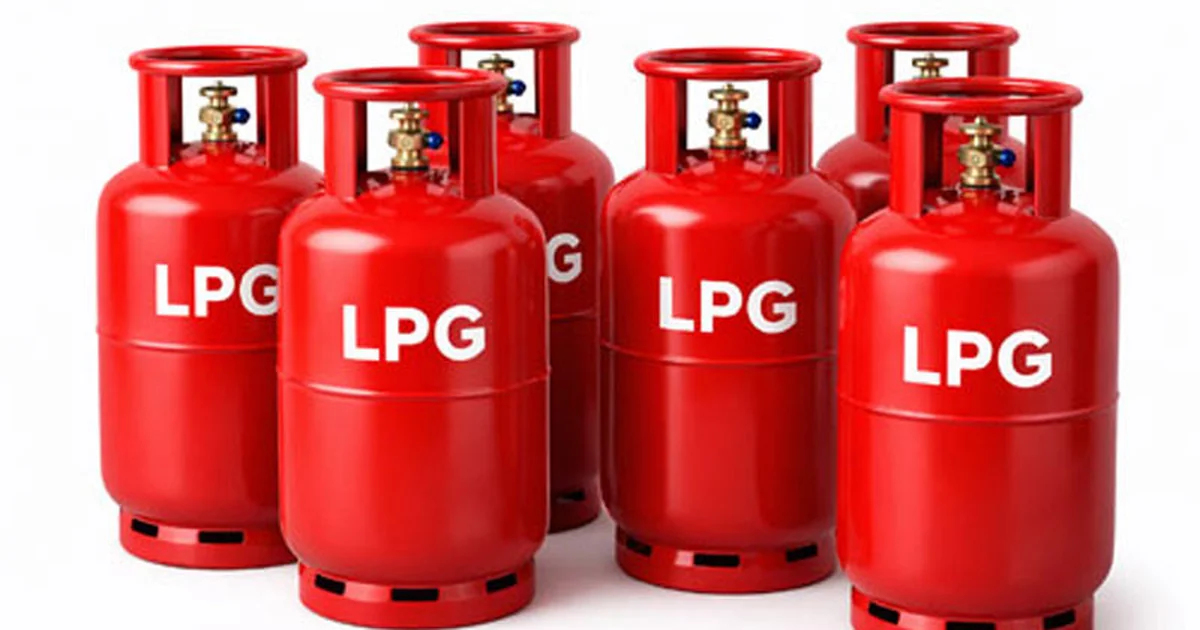
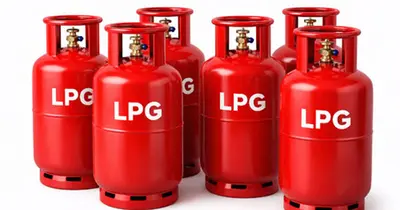
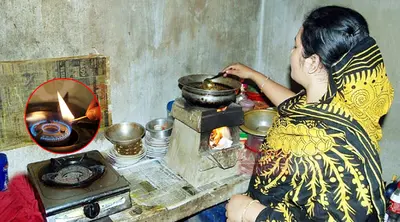
A family of Abdul Khalek, a resident of Mohammadpur in the capital, is now dependent on liquefied petroleum gas (LPG) for cooking. He is fed up after suffering from “various crises” for a long time in collecting this gas regularly. This time he is angry as he is being forced to pay extra despite the sharp increase in the government-set price.
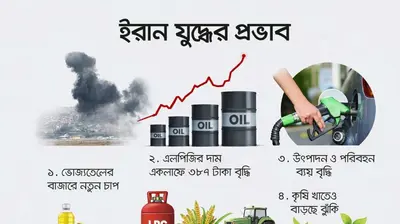
Even after a sudden increase of 387 taka in the price of a 12 kg gas cylinder, he is not getting gas at the government-fixed rate. He is already angry about such a large price hike at once; along with that, his dissatisfaction has reached its peak due to the sellers’ repeated excuses and hide-and-seek of “gas available–gas not available.”
Khalek also expressed anger over the extra price. He said that now they are citing the war as an excuse for the crisis. But even long before this, gas was not available. At that time, shopkeepers charged whatever price they wanted.
“Even now, after the government increased the price, we are not getting gas at that price. A 12 kg cylinder is nowhere below 2100–2200 taka.”
The 12 kg cylinder that was available at 1700 taka has increased by another 400–500 taka after the government raised the price. So why did the government increase the price this is the question of Khalek and many others like him.
When prices kept rising citing supply shortages, the government launched drives last December, after which LPG cylinders disappeared from the market and sellers even went on strike. The interim government was eventually forced to halt the drives. Taking this opportunity, LPG prices more than doubled, and the crisis intensified.
Even after allowing imports on credit, increasing import quotas, and providing various incentives and measures by the government, the supply of LPG did not return to normal. Even then, it was not available at government-set prices.
Meanwhile, prices were increased in January and February. The supply of the widely used 12 kg LPG cylinder in households and shops-restaurants gradually started to normalize. However, complaints remained at the consumer level about charging much higher than the fixed price.
Finally, last Thursday, the Bangladesh Energy Regulatory Commission increased the price of a 12 kg LPG cylinder from 1,341 taka to 1,728 taka, a jump of 387 taka.
With the announcement of price increases for all cylinders at the same rate, overall the price was raised by 32 taka 30 paisa per kg in one go.
Even then, consumers have not been relieved from the burden of paying extra beyond the government-fixed price. They are having to pay an additional 400–500 taka per cylinder.
There is no consistency at all in the statements of retailers, suppliers, dealers, and companies on this issue. One side is blaming the other. The regulator, BERC, also seems helpless; despite knowing everything in the face of consumer complaints and anger, it remains silent.
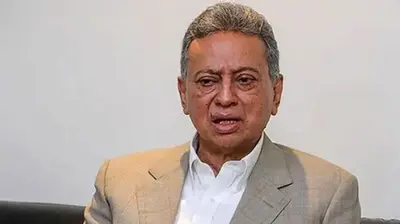
Regarding these issues, BERC Chairman Jalal Ahmed said that currently they are struggling just to manage petrol pumps. In this situation, monitoring the LPG market is “challenging” for them.
However, by talking with importers and supplier companies, they will try to “coordinate” the situation in the coming days.
After setting the new price at 1,728 taka, Khalek, a private employee from Mohammadpur, expressed anger at having to buy the cylinder previously available at 1,700 taka for 2,100–2,200 taka. He said, “The government says there is no crisis, but when we go to buy, we have to pay even more than the increased price. Doesn’t the government see these things? Who is actually running this country?”
His question is, if this “anarchy of charging whatever price they want” cannot be stopped, then what is the need for the government to fix prices at all?
Retailers claim that they are not getting gas from suppliers at government-fixed prices. As they have to buy at higher prices, they are “forced” to sell at higher rates.
In response, the LPG Operators Association claims that no company is selling gas beyond the fixed price.
As usual, they blame middlemen—especially dealers—for the ongoing market instability.
While some dealers denied taking extra prices, others admitted that there is “some gap.”
“Arbitrary pricing”
Monirul Islam from West Shewrapara in the capital said that in December–January, gas was not available even at higher prices. Now gas is available, although at higher prices.
“For those of us who do not have pipeline gas, we have no other option in Dhaka city. We have to buy gas even at high prices. We cannot go on without cooking for days!”
He said, “We have become somewhat hostage. We are forced to pay whatever price is asked. Last month, the 12 kg cylinder we bought for 1500–1600 taka is now 2100–2200 taka. Even before, we had to pay extra beyond the fixed price. Now with the price increase, the extra amount has also increased.”
Saiful Alam, owner of retail supplier ‘Alif Lam Traders’ in West Shewrapara, said he can now only refill Petromax cylinders. In that case, a 12 kg cylinder will cost 2,100 taka.
When asked why he is charging so much beyond the government price, he said, “We ourselves are buying it at 1774–75 taka. Adding transport costs, we cannot sustain unless we keep this price.”
At a tea stall of Momtaz Begum on Tajmahal Road in Mohammadpur, one cylinder was in use while another had been stocked earlier.
When asked how much she bought the 12 kg cylinder for, she said, “Bought it for 2,100 taka. They don’t even give it on credit. They stand there and take cash.”
Enamul Haque, owner of ‘Enam Enterprise’ in the Krishi Market area, said he is selling a 12 kg Bashundhara cylinder for 2,200 taka. Others are being sold for 2,000 taka.
He also cited the same reason for the higher price: “We cannot buy at the government-set price. So we sell at the price we buy.”
Jahirul Islam, owner of ‘Messrs Bismillah Enterprise’ in the Shyamoli area, expressed frustration at the government when asked about prices.
“The government says many things. Tell the government to give it to me at a lower price. I challenge—come and see my vouchers, how much I bought and how much I’m selling.”
This shopkeeper, who delivers cylinders to homes upon phone calls, supplies a 12 kg ‘Total Gas’ cylinder at 2,100 taka.
Evidence of the retailers’ claims of buying at higher prices was also found at the dealer level.
A dealer of Jamuna Gas in Demra, Dhaka, initially hesitated to speak about pricing. Later he said, “It’s problematic to talk about prices like this; the situation is bad now.”
When asked about charging extra, he declined to answer and did not want to disclose his name. Eventually, he said, “The government rate is our rate.”
Asim Roy, representative of BM LPG Gas in Munshiganj, said they are maintaining the government-set price. However, with transportation costs added, retailers are charging slightly more.
When asked why dealer prices are supposed to be lower than retail, he admitted, “There is a bit of a gap here.”
“We work at the route level. There is a gap between the company and distributors. We sell at the government price, but when they add costs and supply to consumers, prices increase.”
Regarding the higher prices and market inconsistency, Mohammad Amirul Haque, president of the LPG Operators Association, said, “No company is charging even one taka extra.
“Let the government inspect the 17 factories. If anyone is doing illegal activities, take action. But no company is charging extra.”
He also claimed that companies are supplying gas with “inbuilt commission” for dealers even below the government-set price so that dealers can still make a profit.
The Managing Director of Delta LPG Limited commented that the situation has arisen due to lack of monitoring at the field level.
“There is the Directorate of National Consumer Rights Protection. There are UNOs at the field level. Where are the law enforcement agencies? Dealers claiming higher prices should have invoices—check them. Take action against a few, and the rest will fall in line.”
He stated that there are at least 15–16 thousand retail shops and over 200 dealers selling LPG across the country.
Until these middlemen can be controlled, the market cannot be regulated, he believes.
“Those who are taking advantage of the crisis face no action. Those who are hoarding are not punished. Take some action, and things will improve.”
According to BERC, Bangladesh is almost entirely dependent on imports for LPG. The country’s monthly demand is around 120–130 thousand tons, and last year 1.465 million tons were imported.
A representative of Bashundhara LPG said they are selling a 12 kg cylinder at 1,820 taka.
When asked why it is higher than the government price, he said the rest is “delivery charge,” applicable mainly within Bashundhara residential areas.
Regarding higher retail prices elsewhere, he said, “Retailers buy and sell at their own price, so it becomes higher.”
Jasim Uddin Bahar, Head of Sales of Universal LP Gas, claimed that companies are not charging extra.
“We maintain the government-set price. Due to market competition, sometimes we even sell below it. Why retail prices are higher needs ground-level investigation.”
When asked whether adding profit and cost naturally increases retail prices, he pointed to a syndicate.
“The government must ensure proper monitoring at all levels to stabilize the market.”
Energy expert Professor M Shamsul Alam said that although prices should be determined through public hearings, BERC is not doing so. By setting prices without hearings, the regulator itself is committing wrongdoing. At the same time, due to BERC’s “inactivity,” licensees are also committing offenses.
He questioned, “If the law under which BERC was created is violated by itself, how can this sector function?”
He recalled that in 2021, the court ordered BERC to set LPG prices through public hearings, but it has not complied.
“If the law is not followed, how can the price be justified? Even if the price were 300 taka lower, it would still not be fair.”
“If something illegal benefits you, ultimately it will harm you. The way prices are being set cannot be justified in any way.”
Under Section 42 of the BERC Act, violation of the law can result in up to 3 years’ imprisonment or a fine of at least 5,000 taka or both.
Section 43 states that failure to comply with BERC orders may result in up to 3 months’ imprisonment or a fine of at least 2,000 taka or both.
Reminding of these laws, the expert said, “Not following BERC orders or laws is punishable. BERC itself has committed offenses by not following the law, and licensees are also violating BERC orders.
“There are three types of licensees: retailers, wholesalers, and storage operators. Separate licenses exist for import. Others were not licensed to do such activities. If laws are not followed and unlicensed people are selling, everything becomes illegal. Charging above fixed prices is also illegal.”
According to him, despite all these violations, there is no initiative from BERC to impose punishment. Its inactivity is encouraging irregularities, causing market instability.
He believes that if licenses were revoked and penalties imposed, the situation would not have reached this point.
Instead, he alleges, they are being patronized, turning LPG into an unethical business.
BERC Chairman Jalal Ahmed also acknowledged the lack of control in the market.
“Importers say their trade has increased. Dealers say they are paying more. After transportation, they have no choice but to charge higher prices.”
He said they will soon hold meetings with producers and marketers to address the complaints and try to coordinate among all parties, although April may remain somewhat “crisis-prone.”
Source: bdnews24