

Iran Slams Bangladesh Statements on US-Israel Attacks as “Unclear”
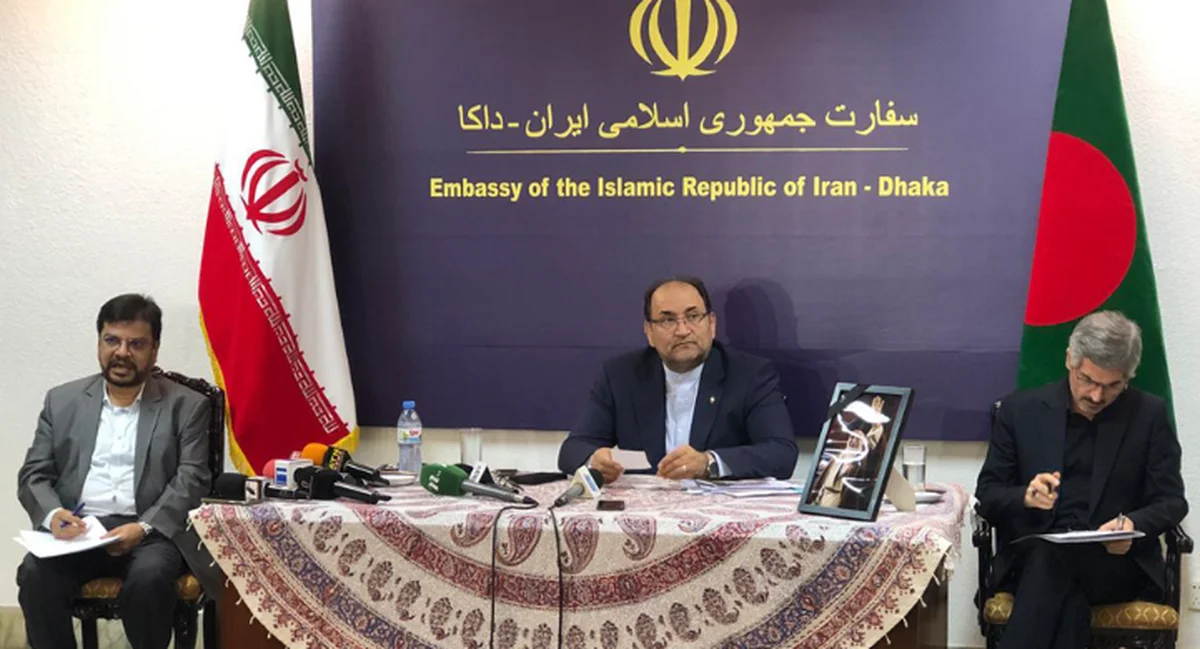
Iran’s Ambassador to Dhaka, Jalil Rahimi Jahanabadi, has said that Tehran felt hurt by the two statements issued by Bangladesh following the attacks by the United States and Israel on Iran.
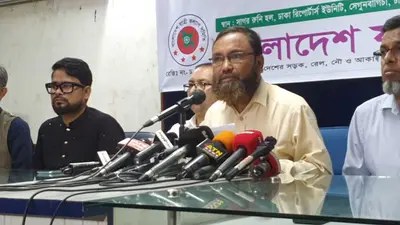
Speaking at a press conference at the Iranian embassy in Dhaka on Wednesday, he said Tehran expects a clear “condemnation” of aggression from Dhaka instead of such “ambiguous statements.”
At the press conference, the ambassador said, “We have some concerns regarding the statements issued by the Bangladesh government so far.
“When we see that many European countries like Spain, and even large public protests within the United States, along with officials there, are directly condemning this war and criticizing it, we expect Bangladesh not to issue ambiguous statements but to take a clear position on this matter.”
He said, “We consider Bangladesh a close friend and brother. We want our relationship to become stronger and smoother, and that both countries can help each other move forward.
“The statements that have been issued only express concern, whereas it is clear that the United States has taken an aggressive role here. Any act of aggression deserves condemnation. Therefore, we expect a clear condemnation.”
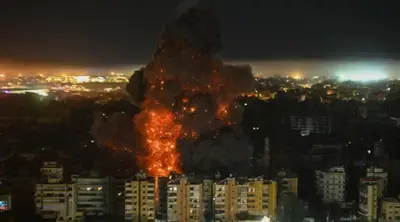
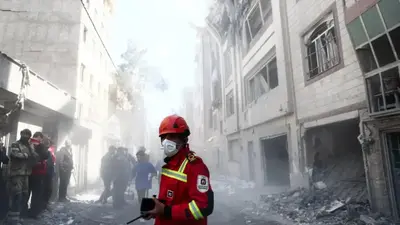
Following the attacks by the United States and Israel on Iran on February 28 and Tehran’s retaliatory strikes, the new government issued two statements that differ from Dhaka’s previous position. Earlier, Bangladesh had consistently condemned almost all Israeli attacks on Iran.
In the first statement issued on March 1, Dhaka did not condemn the joint attack by the United States and Israel on Iran. The statement also did not mention the death of Iran’s Supreme Leader Ayatollah Ali Khamenei in the attack.
In the Ministry of Foreign Affairs statement, Bangladesh condemned “violations of sovereignty” of several Middle Eastern countries, naming seven countries but excluding Iran.
That statement aligned with positions taken by US allies such as the United Kingdom, Germany, and France, as well as countries affected in the Middle East.
Amid criticism of that statement, in another statement the following day, the Ministry of Foreign Affairs expressed “deep sorrow” over the death of Ayatollah Khamenei.
Although the statement described the killing as a “targeted attack in violation of international law,” it did not mention the United States or Israel by name.
Referring to the similarity of Dhaka’s statements with those of Gulf countries affected by Iran’s retaliatory strikes, Jahanabadi said on Wednesday, “We do not want war with any Arab or Muslim country.
“We also understand that several million Bangladeshi workers are in Middle Eastern countries. We want Bangladesh to avoid saying anything that might upset those countries.”
In response to a question about Dhaka’s “limitations” due to its relations with other Middle Eastern countries, he said, “We understand that Bangladesh has certain limitations. However, this is an international issue. As Bangladesh is a member of the United Nations and the OIC, the UN Charter itself authorizes speaking out against aggression, and that is what we expect.
“If any country does not clearly oppose violations of the UN Charter, such trouble may one day reach them as well.”
The ambassador said, “According to the UN Charter, it is illegal for one country to use force or attack another country. Our expectation is that when a country violates the UN Charter and carries out aggression against another, other countries will condemn that aggression in accordance with the Charter.
“We only want the aggression carried out by the United States and Israel to be condemned. We have no other demands.”
Responding to a question about whether Iran has formally conveyed its dissatisfaction to Dhaka over the statements, he said that during Eid-day greetings hosted by President Mohammed Shahabuddin and Prime Minister Tarique Rahman, only courtesy exchanges took place.
Expressing hope to raise the issue if he meets the Prime Minister, he said, “We do not want to communicate this through letters. If we meet, we will discuss it.”
The ambassador also mocked US President Donald Trump for repeatedly changing his position following the attacks on Iran.
He said, “The US President has declared himself victorious more than a hundred times so far. In the morning he says, ‘We have won.’ In the afternoon he says, ‘We are continuing discussions, but we do not know with whom.’ At night he says, ‘We will destroy everything.’
“Our major problem is that the United States currently has a president who does not understand even himself, nor does he understand the global situation.”
He added that through such behavior, Trump is taking himself, the Middle East, and the entire world toward a “very dangerous path.”
However, he said, “We have not held any discussions with the United States. Pakistan and Turkey are trying to mediate, and we welcome that.”
The ambassador further said, “As long as the United States and Israel have the strength of weapons, they continue war, and when they face shortages, they talk about peace. When they are in trouble, they will talk about stopping the war, and I have to accept that this cannot happen.”